The Best Hitch Bike Racks of 2023

HOSTED BY: https://fatmtnbike.com
TODAY'S RIDE
When cycling, your shoes are an important accessory that enhance comfort, control, and efficiency, and finding the best road bike shoes can help elevate your experience and performance. As a critical interface between you and your road bike, the importance of quality, well-fitting footwear should not be overlooked.
Whether you’re a novice, weekend warrior, or aspiring racer, the right pair of road bike shoes not only look good but help you perform at your best. Stiff soles and a secure fit provide stability and efficient transfer of power into the pedals while supple uppers and quality closures offer snug, glove-like fits, and all-day comfort.
With so many models on the market to choose from, it can be a daunting task to wade through the marketing lingo and specs to find the right pair of road bike shoes that meets your needs. To help, we gathered up a selection of the best road shoes on the market to test and compare side by side while analyzing the design and important performance characteristics like fit, comfort, pedaling efficiency, and ventilation.
Our top-rated picks are listed below, but if you’d like to quickly compare specs at a glance be sure to reference our comparison chart. If you need help deciding what to buy, check out our detailed buying advice or FAQ section for answers to your questions.
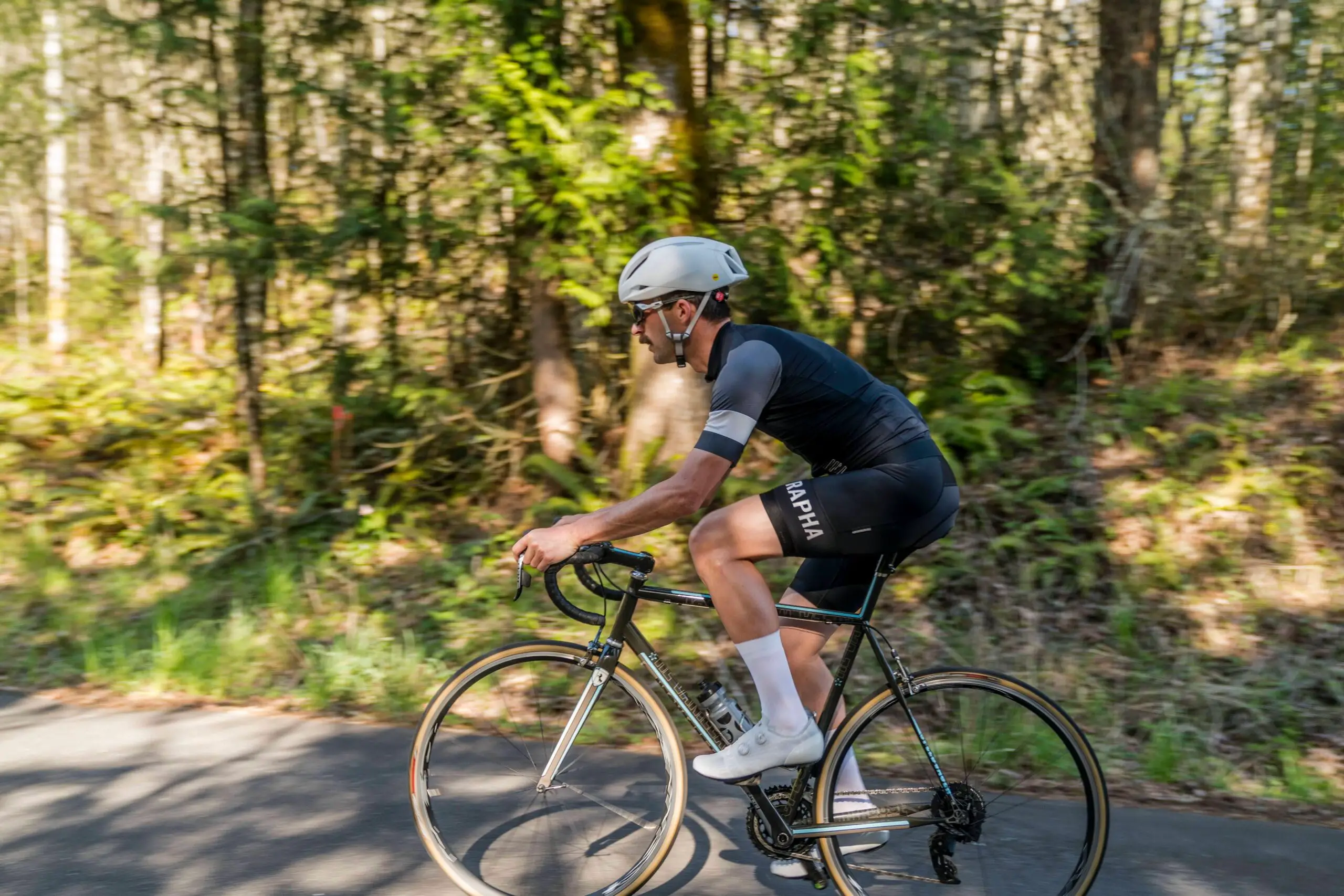
Rapha has developed a breakaway winner in the Pro Team Shoe, which manages to balance performance, fit, and aesthetics in a stunning, uncompromised package. The Pro Team offers a slipper-like fit in the upper, along with an unwaveringly stiff and stable platform for channeling big power to the pedal spindles. Of course, Rapha would never neglect or compromise aesthetics. In fact, they have triumphed in this regard with the Pro Team, creating a shoe that is minimal, timeless, graceful, and unmistakably Rapha.
The 3D woven Powerweave upper harmonizes perfectly with the shoe’s last to cradle the entire foot in a naturally athletic posture. The toe box is wide enough to allow the forefoot to spread out as needed, without feeling lost or disconnected from the pedal spindle. Arch support is gently-shaped, well-placed, and can be fine-tuned with included Velcro shims. The heel cup is tapered and reinforced to provide both vertical grip and lateral stability during explosive efforts.
While the upper is luxurious, the Powerweave material remains firm enough to complement the mechanical precision of the BOA IP1 dials. A well-padded tongue pampers the tarsal bones and enhances the natural comfort of the shoe. The BOA Dual Dial IP1 system allows for quick, precise adjustments both before and during your ride. The benefit of the BOA Dual Dial IP1 is its ability to adjust both ways, so you can decrease the tension just slightly, without completely resetting the tension at zero.
At 500g for the pair in size 42, the Pro Team is certainly light, especially given how solid and stable it feels while tapping out a steady tempo, or igniting an attack off the front of the peloton. The outsole is constructed from a gorgeous unidirectional carbon and provides an unyielding connection to the pedal spindle. The outsole is devoid of any venting – a welcome choice in more temperate climates – and features a large, non-replaceable heel pad for walking traction.
Thankfully Rapha has kept branding to a minimum, helping the Pro Team stand on their own and coordinate well with kits from any brand you might fancy. That said, they look simply opulent when finishing off a full Rapha kit. The Pro Team comes in a full range of sizes, with a tasteful menu of colors that will appeal to a broad audience. While the Rapha Pro Team is an expensive option, we feel its fit, looks, easy adjustability, and world-class performance combine to ease any doubts about its price tag.
In addition to testing this shoe for this buyer’s guide, Bikerumor’s Cory Benson gives a more detailed review of the Pro Team just after its launch.

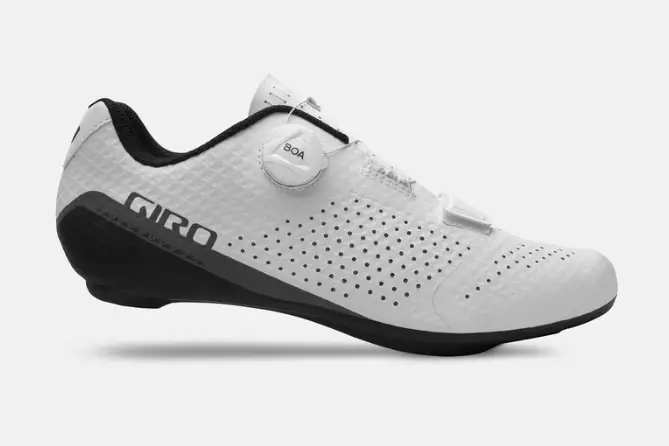
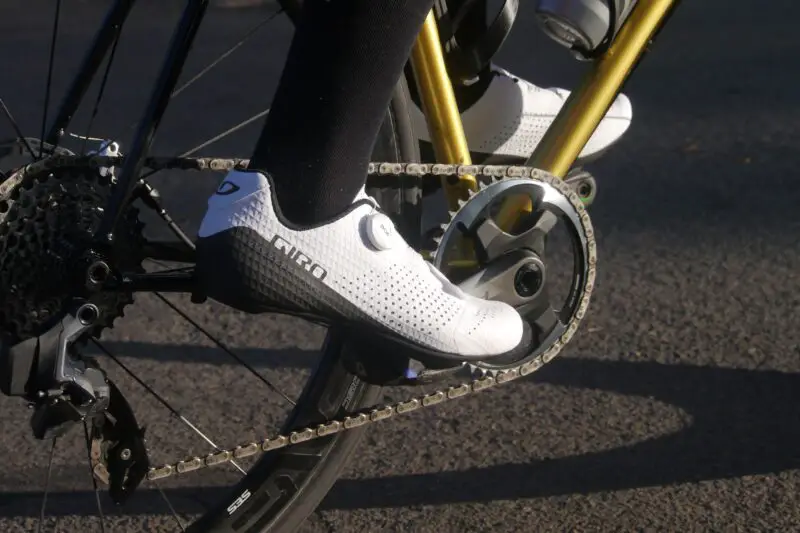
The Giro Cadet offers tremendous value for recreational road riding, with a fantastically supple upper, BOA adjustment, sleek aesthetics, and a stiff sole. They aren’t perfect, but they are tough to match at their price point, and we feel they are a sensible and affordable option for non-competitive riders.
Getting into the Cadet is easy – as is typical of all Giro shoes – thanks to a single BOA L6 dial that fully releases when pulled away from the upper. The heel cup is deep and luxurious, firmly cradling the heel and lower Achilles tendon. The forefoot receives equally nice treatment, thanks to the Cadet’s supple and perforated Synchwire upper. Once the BOA L6 dials are tensioned and the single velcro strap is adjusted, the Cadet rivals the fit and feel of shoes that are double the cost. Giro even added in the same super-stretchy BOA wire guides that are featured on the range-topping Imperial road shoe, clearly demonstrating their desire to create a great fit in the Cadet.
Out on the road, the one main issue with the Cadet becomes immediately apparent. The wafer-thin insoles – which are really just foam liners – are insufficient in both arch support and vibration damping. After only an hour of riding, the soles of my feet felt like I was riding in shoes that are much stiffer than the Cadet, and yet the pedaling efficiency didn’t come close to rivaling a pure race shoe. For my second ride in the Cadet, I switched the stock foam liners out for a pair of Giro Supernatural insoles ($40), which are included on higher-end models, and available separately from Giro. After this upgrade, my feet were much happier, thanks to sufficient arch support and enhanced vibration damping.
Otherwise, the experience of riding in the Cadet was excellent. Ventilation is ample, and there were no pressure points across the entire upper. I was able to adjust the volume and tension easily using the single velcro strap and BOA dial. Giro knows the formula for a beautiful road shoe, so it’s no surprise to see the Cadet executed in a clean, minimal package that defies its modest price tag. Thanks to its minimal stitching, the Cadet will be easy to clean and keep looking fresh for a long time.
While I can’t recommend the Cadet to racers, they’re not the audience of this shoe. For recreational riders who prioritize comfort, appreciate the convenience of BOA adjustment, and are looking for an affordably-priced road shoe, the Giro Cadet is a clear winner.

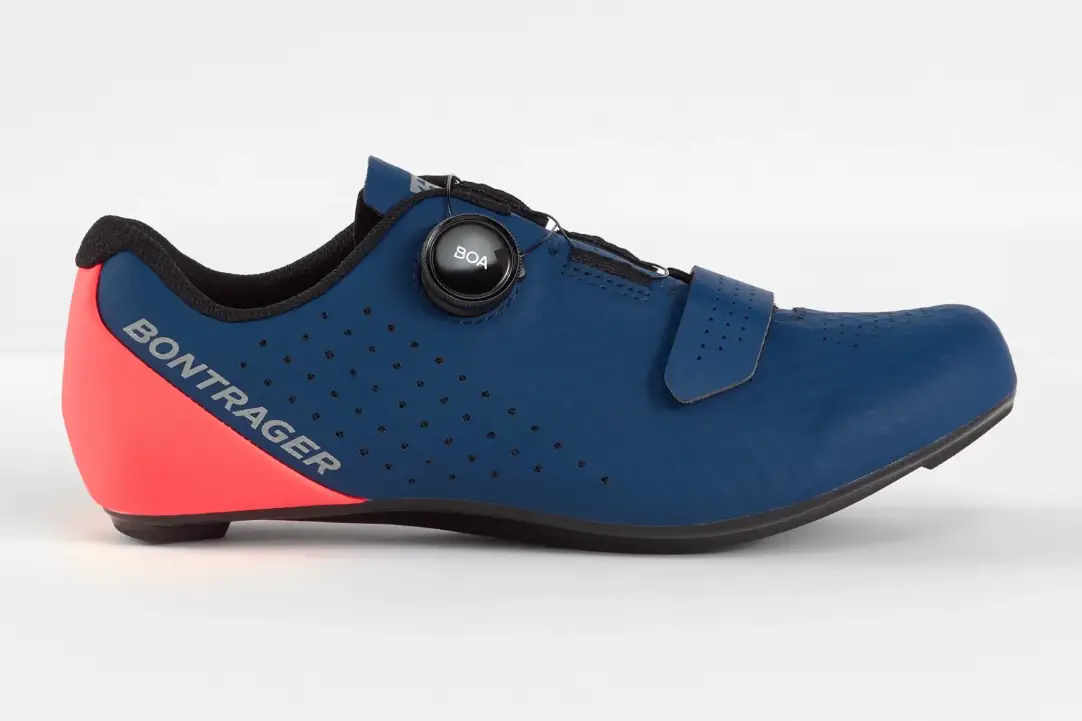
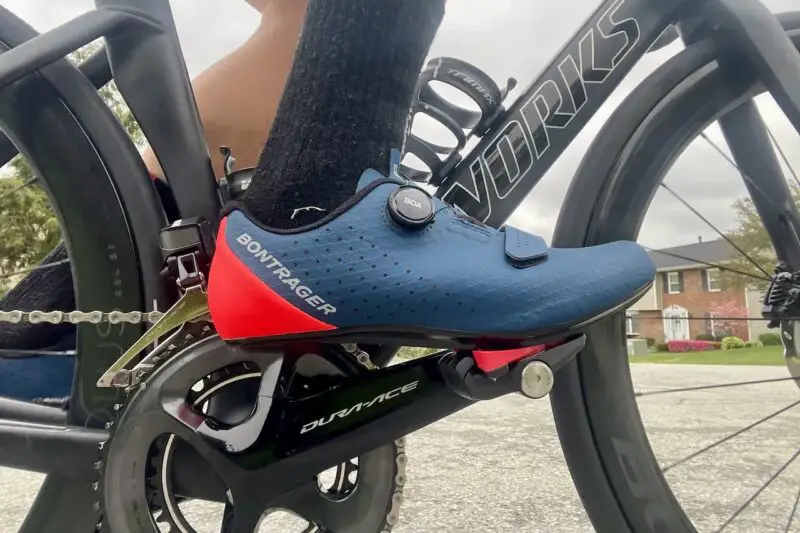
Trek and Bontrager make everything you could possibly need to outfit yourself from head to toe for any type of cycling, including the bikes you ride. They make a full line of road cycling shoes from the range-topping XXX down to the less expensive Bontrager Circuit. Despite their lower price, our tester came away impressed by the Circuit’s comfort and performance.
The uppers are made from a supple synthetic mesh and TPU material that is both lightweight and very breathable. The Circuit uses Bontrager’s inForm Race last which we found to be very accommodating and a touch roomier in the toe box than the previous version. The heel cup is nice and deep, and we were able to get a comfortable and secure fit thanks to the Boa L6 dial over the upper and midfoot and the velcro strap over the toes that actually does a good job of snugging the shoe over the forefoot. We also found the stock insoles to be better than expected with a padded arch and midfoot providing adequate support out of the box.
The synthetic mesh and TPU uppers allow for solid ventilation of the uppers, and a small mesh window on the sole by the toes lets a little air in from below. The 85% nylon and 15% glass fiber composite soles have a middle-of-the-road stiffness of 7 on Bontrager’s scale that goes up to 14. While it is not on par with the uber-stiff high-end shoes from a stiffness standpoint, we feel it strikes a great middle-ground for recreational riding. The soles also have a bit of rubber added at the toe and heel to facilitate walking and prevent slipping off the bike.
Like many lower-priced shoes, the Circuit features standard 3-bolt cleat mount holes as well as channels for 2-bolt mountain cleats. For recreational riding, we think the option to choose either style of pedal will be a benefit for many people. The only caveat is that the shoes don’t come with the 2-bolt cleat plate, so that is something you’ll need to find at your local bike shop.
If you’re looking to upgrade to your first pair of road cycling shoes, or simply want a comfortable pair of kicks that aren’t overly stiff for your road bike sessions, we feel the Bontrager Circuit are very worthy of consideration.
Find out more in our full review of the Bontrager Circuit road cycling shoes.

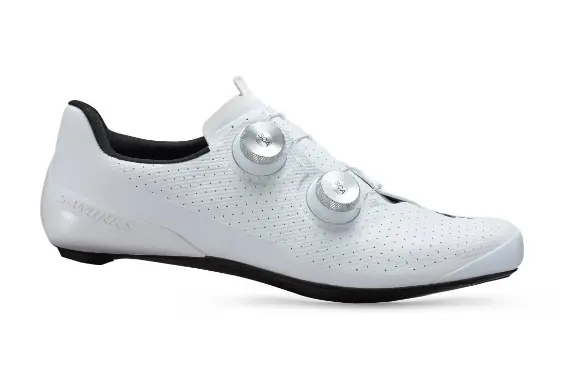
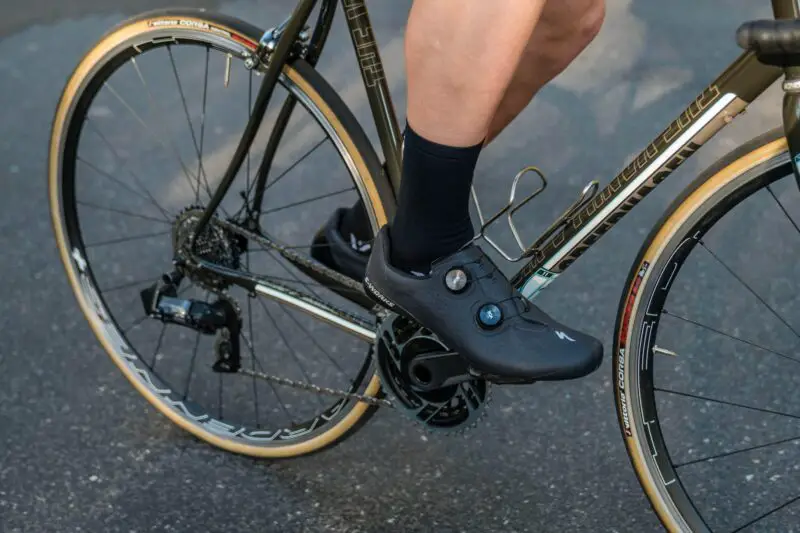
The new S-Works Torch represents a shift in design at the top end of the Specialized shoe lineup. While the Torch will still be a popular choice among elite racers, it has been tweaked to appeal to a broader audience, with a more comfortable, accommodating fit than previous S-Works road shoes. The carbon base plate has increased in width by 4mm over the S-Works 7, and the upper material and heel cuff have both been softened for more luxury and less irritation.
Although I personally found the mid and forefoot of the Torch to be a tad wide for my average-width feet, I was still impressed with the supple feel and generous stretch offered in the forefoot. This supple stretch in the outer forefoot contrasts noticeably with the feel in the midfoot, which is reinforced to be stiffer, providing a solid base for the BOA S3 Snap fit system to support the middle and top of the foot.
The heel cuff was a literal sore spot for some owners of previous S-Works models, with its high-cut and unyielding material tending to dig and irritate the Achilles. Not only is the Torch heel cut far lower and in a more rounded shape, but there is now significant padding positioned to pamper the Achilles tendon. With shoes this good, any criticism feels like nitpicking, but for me, the Torch heel cuff is actually a bit of an overcorrection from the S-Works 7. While it is better, to be clear, the Torch heel might feel a bit vague and loose to those riders who love a very snug and firm grab at the heel.
Sticking with the heel, Specialized has added an asymmetrical heel cup which they say aids in knee alignment. This asymmetry, Specialized says, was chosen based on data from their Retul bike fitting system. While I would posit that cleat position and hip joint mobility will have a much greater bearing on knee comfort, I applaud Specialized for approaching the Torch as not just a shoe, but the critical contact point that sets the tone for everything that follows throughout the rider’s body during the pedal stroke. Not surprisingly, Specialized has stuck with their Body Geometry last, which features a built-in varus alignment. This means that the rider’s big toe is positioned higher than the little toe, resulting in a more natural, healthy position for the foot, and in turn promoting better knee alignment and tracking, according to Specialized.
Another small issue for the Torch is the choice of the BOA S3 Snap-fit dials. While their adjustment is smooth and quiet, and the dials handsome and minimal, the lack of instant, full release may be bothersome if you like pull up on BOA dials and kick off the shoes at the end of the ride.
Sometimes cycling equipment, whether it be shoes, wheels, or even complete bikes, are almost too good to stand out, and that’s the case with the Torch. What I mean is that while the Torch was excellent or at least great in every single aspect, it didn’t astonish me in any way, or rise above all others in any single category. That said, while shoes may surpass them in one single criterion, on the whole, no shoe in our test was as well-rounded as the Specialized S-Works Torch. It is sure to be massively popular because it simply takes a safe, iterative step forward in the lineage of great S-Works road shoes and it looks darn good doing it.
Check out our in-depth review of the Specialized S-Works Torch for more information.

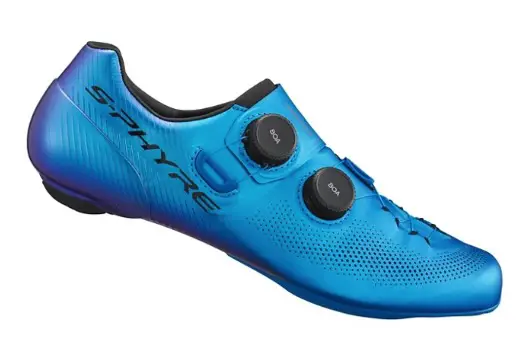
The third generation of Shimano’s Pro Tour-tested flagship road racing shoe reaches new heights of performance, luxury, and aesthetics in the S-Phyre RC903. The construction of this shoe is magnificent, showcasing the most advanced technology available in a beautifully designed package. The RC903 sits at an eye-watering price point, however, the allure that these shoes spark at first glance is only enhanced once they are slipped on, and their supremacy is duly confirmed from the first stomp on the pedals.
Getting into the S-Phyre RC903 is intuitive and quick. The BOA Li2 dials are micro-adjustable both ways, instead of just tightening or fully disengaging. This makes dialing in the correct amount of tension in the mid and forefoot easy, both before and during your ride. The dials also have a clean, minimal appearance that keeps the profile of the S-Phyre RC903 tidy and helps smooth airflow across the shoe as it churns through the turbulent air that flows off the front tire.
Riders with high arches may love these shoes. I normally use custom insoles with significant arch support, but in the S-Pyre RC903, I removed the Velcro arch support completely to achieve the ideal level of support. Once the BOA tension and arch support location are dialed-in, the S-Phyre RC903 has a secure, neutral feeling on the foot, with the right amount of support precisely where it’s needed, evenly spread from the forefoot to the heel cup.
Vertical space in the front end of the shoe is ample, giving the toes plenty of space to breathe and to never feel squished from above. That said, these are not high-volume shoes, overall. For riders with even slightly wider than average feet, or who feel pressure on the outboard side of the forefoot with their current shoes, we strongly recommend going to the wide version of the S-Phyre RC903 or trying on a 1/2 size up. Based on previous Shimano models I have ridden and enjoyed in medium width, it’s apparent that recent iterations of the S-Phyre line are trending narrower.
The S-Phyre RC903 allows a supreme level of ankle mobility, by way of a generously low-cut edge on the overlapping wrap section at the front of the ankle, and a heel cup that sits well below the ankle joint and Achilles tendon. This gives the S-Phyre RC903 the slipper-like feeling over the top of the midfoot that so many cyclists love.
There is virtually zero chance of crank arm rub while riding in the S-Phyre RC903, due to the miniscule amount of material used along the inboard side of the shoe’s mid-foot. This design may also help some riders achieve a better q-factor by moving the shoes closer to the crank arms than ever before. Cleat adjustability in the S-Phyre RC903 is prodigious, by way of mounting hardware that slides fore/aft beneath the surface of the outsole. Combined with the fore/aft adjustability of the cleat, riders can now position the cleats perfectly to their bike fit and pedaling mechanics.
Ventilation is ample not only beneath the toe but also through an air scoop in the rear traction pad that rushes air through drillium-esque vent holes in the sole, directly onto the rider’s heel. The rest of the full carbon outsole is seductively wrapped by the microfiber leather upper. This design not only adds an unmistakable bling factor to the shoe but also helps prevent riders’ heels from twisting under maximal efforts. Befitting a shoe of such regal beauty, Shimano has incorporated tire rub protection panels on the inboard toe, perfectly color-matched, of course.
If you don’t shy away from the bold style and are keen to experience the most advanced technical features available in a no-compromise race shoe, the Shimano S-Phyre RC903 should be on your shortlist.

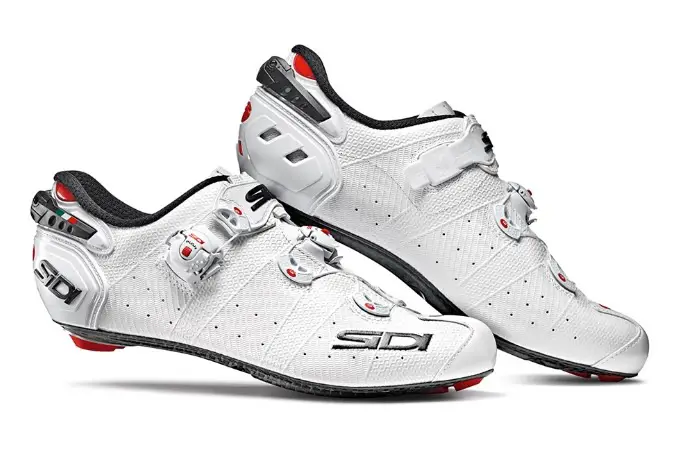
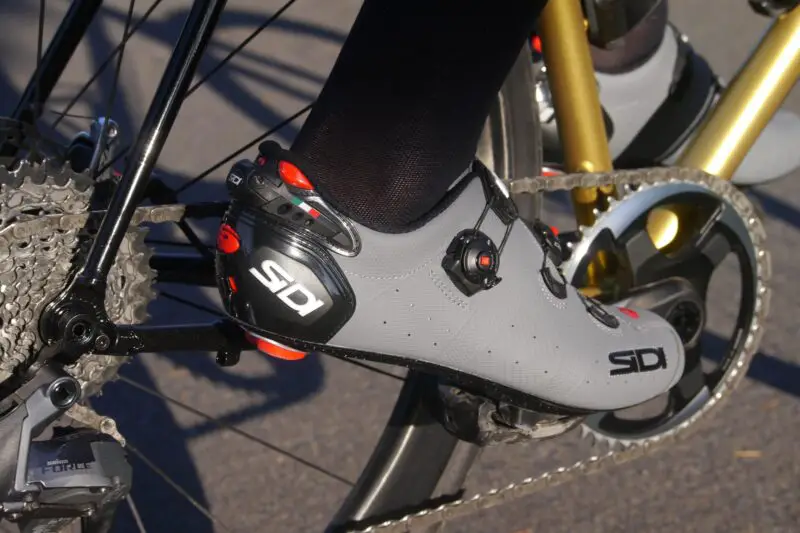
The Sidi Wire 2 are the most expensive pair of road shoes we tested, but astonishingly, they aren’t even the most expensive model in Sidi’s lineup. Not long ago, Sidi was the unquestioned leader in the road shoe market. Focused solely on footwear for having fun on two wheels, Sidi is part of the proud tradition of Italian shoe-making. And like most things produced for cycling in Italy, Sidi shoes tend to follow the old adage “squadra vincente non si ciamba”, or “if it ain’t broke don’t fix it”. With such a long history and devout following of riders, this approach will likely never change.
So why do so many riders love Sidi shoes? Anecdotally, I can attest to regularly seeing riders wearing shoes from the ’80s and ’90s. This is a testament to the quality and longevity of Sidi shoes. For comparison, several shoes I’ve worn from other brands have failed after only one season, either by way of the upper separating from the last, or the carbon sole cracking. Another reason for Sidi’s popularity is their fit, which can be described as neutral and agreeable. It sounds so simple, but when a shoe is easy to fit, and then lasts so long that it perfectly molds to the rider’s foot, “squadra vincente non si ciamba”, begins to sound like gospel. But it’s not all about merely being a bulletproof training partner. Tune in to any World Tour race and you’ll see a slew of top riders wearing the Sidi Wire 2, which I was excited to review and compare with other top-level road shoes.
Out of the box, the choice of materials, stitching, and overall construction are flawless. Yet, there is nothing precious or delicate about the Wire 2. The motorcycle boot influence is clear, and so is the urge to clip in as soon as possible when holding them. Sadly, this urge to get into the shoe and get riding led to one of the issues I had with the Wire 2. First was the Techno Wire adjustment system. The system works fine, to be clear, but compared to BOA dials, Technowire is fiddly, and that’s perhaps being generous. I eventually learned to adjust the Technowire mid-ride, but there was a big learning curve and much finesse was required. I do applaud Sidi’s placement of the lower Technowire on the top of the tongue, as opposed to the outboard side of the shoe. This positioning helps the system achieve a nice, even pressure across the top of the foot.
Another couple of issues became apparent once I had the shoes on. First, they are hefty, around 60 grams per shoe more than some of the other high-end competition. Second, the wafer-thin insoles simply do not offer enough support and were immediately swapped out for Giro Supernatural insoles. This dramatically improved the fit in the sole of the Wire 2. To be fair, heavier materials offer greater longevity. Also, not many stock insoles are worth keeping, and most high-mileage riders use a pair of custom orthotic insoles or at least an upgraded option from the likes of Giro or Specialized. Another reason for the additional weight is the extra plastic in the heel cup that comprises the adjustable heel retention device. A couple of quick turns with a flathead screwdriver allowed this apparatus to give me a nice snug hold on my Achilles. This type of customization is perhaps overkill, but I found it fun to tinker with, and helpful in getting the best fit possible with the Wire 2.
Out on the road at last, I was very pleased with the experience of riding in the Wire 2. While many shoes feel like bath slippers with a carbon sole attached, the Wire 2 felt more resolute and solid everywhere. It felt like, well, an actual shoe. The forefoot offered plenty of volume both vertically and laterally, and there was never a hint of pressure points or numbness throughout my test riding. As expected the sole was unyielding under my middling sprint power and kept my foot supremely stable at all times.
The Wire 2’s price tag needs to be discussed, but I will defend it vehemently. The Wire 2 will set you back $500. Yes, you read that correctly. Now, if you recall my anecdotes about seeing riders using Sidis from multiple decades past, and other shoes falling apart in less than 1 year, I think the value of the Wire 2 should be more readily apparent. They will absolutely last 10 years of riding 10 hours per week. If they don’t, Sidi will take care of you quickly, through your local bike shop.
The Wire 2 won’t be for everyone. There are issues, but none that are fatal. While heavy, the fit is great. Although the Technowire dials are fiddly, they become familiar and easy with time. As for the cost, yes, $500 is a pill to swallow, but in the lifetime of a pair of Wire 2, you could easily burn through $1,000 worth of less carefully made shoes. If you’re not put off by the bold branding (Viva Italia!) the Sidi Wire 2 could be the best choice out there for your riding or racing.

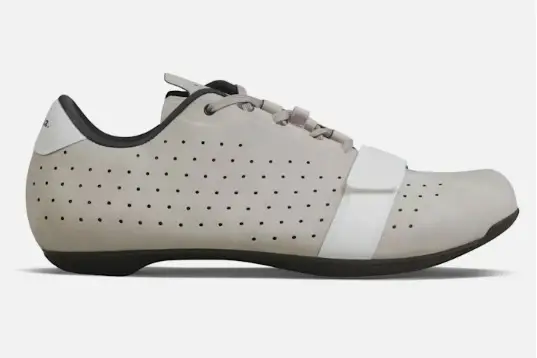
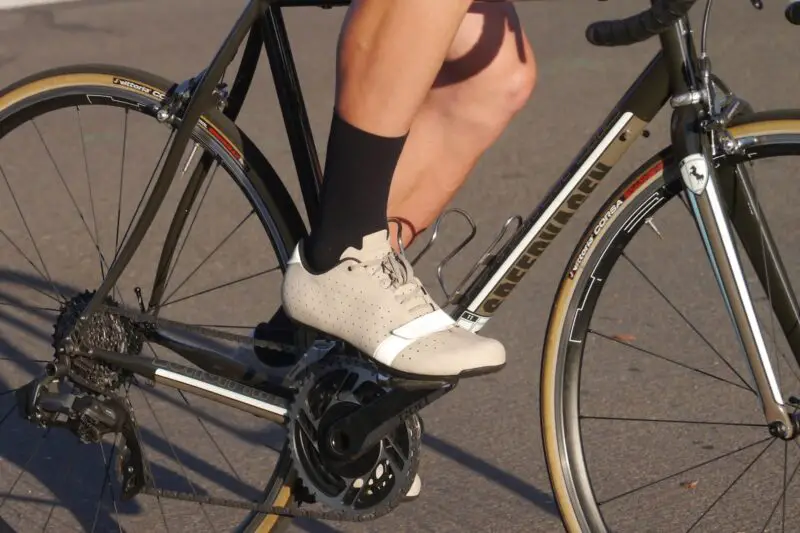
The Rapha Classic stands apart in the road shoe market, shunning many of the trappings of high-end race shoes and aiming instead to tame the rugged world of modern road riding. While the Classic is gloriously minimal, with just two discreet Rapha logos per shoe, its design language leaves no doubts as to its origins. As we expect to find in any Rapha product, the Classic slips significant innovations into its beautiful form and gives riders a luxurious and upgraded experience.
The Classic has plenty of space in the forefoot and a secure but supple fit in the heel. The upper is cut low enough to allow the ankle to move freely, and the tongue conforms well to the tarsal bones. Since the Classic is only offered in one width, I recommend trying on a half-size down from your usual number, in order to ensure optimal volume in the forefoot. While Rapha did include a Velcro strap at the toe, its ability to shrink the forefoot is limited, and it’s mainly a style element.
The Classic is laced but does not use traditional eyelets to anchor the laces. Instead, the upper is double-walled in the midfoot – extending from sole to tongue and back down again along the inside of the shoe- with small sections along the top cut away to anchor the laces. Because of the amount of surface area available for the laces to pull upon, the upper remains completely free of pressure points as the lace tension increases. Once the laces are adjusted and tied, the laces and double wall upper work in tandem to create a luxurious and perfectly even hold across the top of the foot. The design also gives the upper a super clean, seamless look.
Due to this double-walled design, the perforations in the middle of the upper do not allow air to flow all the way through to the rider’s foot. Likewise, the outsole does not feature any vents. So, for riders who live in extremely hot climates, the Classic will not provide sufficient venting to stay comfortable. However, for riders living in temperate climates, or who struggle with cold feet, the lack of ventilation could be a boon.
Sole stiffness in road shoes means different things in different situations and is perhaps over-valued by many recreational riders. Yes, for winning sprints at 60 km/h, or unleashing repeated, searing attacks up 10% grades, soles must be unyielding underfoot. However, when tapping out a 100 km ride with your mates, the benefit of sole stiffness is in the stability it provides the foot. Stability improves efficiency, prevents hot spots, and reduces fatigue. The Classic provides enough stiffness to be a superbly stable shoe but stops short of the buzzy, punishing stiffness that plagues many high-end race shoes.
Some riders hop on the bike and don’t unclip until every interval is done and every KOM is conquered. Others like to get off the bike for a coffee, hike down to their favorite swimming hole, or maybe want to use road pedals on their gravel rides. For these intrepid souls (Ha!) Rapha has coated a large portion of the carbon fiber sole of the Classic in a TPU cover that provides excellent grip, quiet steps, and protection against damage from rocks and debris. Yes, this adds weight to the shoe, but it also could significantly extend the life of the shoe depending on a rider’s walking habits.
The insole of the Classic features a simple, intuitive means of adjusting the arch support location. Two pairs of arch support wedges (medium and high) are included in the box and can be velcroed to the bottom of the insole to match the arch shape and depth of each foot. It might take some trial and error to get the position dialed in, but it’s well worth the time. Many brands use this type of arch support system because it’s simple and works well.
The Rapha Classic is a rugged shoe with timeless beauty and luxurious comfort. It’s my personal choice for all my recreational rides and I expect to still be using this shoe many many years from now. If you’re looking for something a little bit different, yet refined and built for adventure, this shoe is a strong candidate.

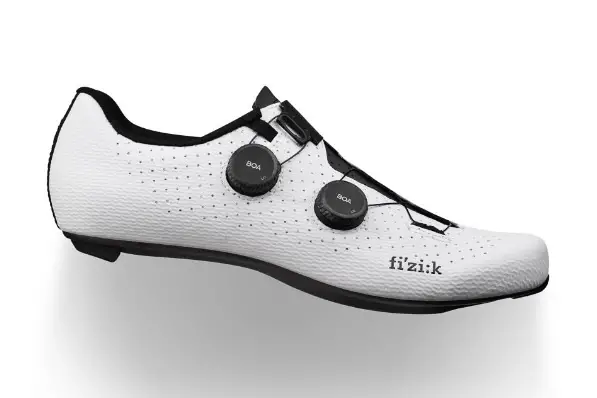
The Fizik Vento Stabilita Carbon is one of the brand’s top-level road cycling shoes that takes a unique approach to arch support with a novel design. By connecting the upper Li2 Dual Zone BOA dial to straps that anchor into the outsole of the shoe and wrap around the medial arch, Fizik aims to create a dynamic arch support system that you can adapt to your feet. This, of course, is coupled with a super stiff carbon sole and comfortable laminated upper in a sleek and lightweight package.
The closure system of the Stabilita Carbon is separated into two zones each with its own Boa dial. The lower dial tightens the shoe over and around the forefoot while the upper Boa is part of the Dynamic Arch Support 2.0 system. By simply twisting the upper BOA dial, riders can add or decrease the amount of upward pull that the straps apply to the arch of the foot with the aim of creating a truly custom level of support. In practice, I did not find the system as effective as I’d hoped it would be, although everyone’s feet are different, and consumer reviews range from extremely positive about the system to lackluster. Based on my experience, I’d recommend trying this shoe on before purchasing to make sure it works for you.
Another issue with the arch support system is that it allows water to seep more easily into the instep of the shoe. So, for riders in damp climates, the Vento Stabilita likely isn’t the best choice.
These issues aside, the Vento Stabilita is a solid race shoe. Its carbon fiber sole is impressively stiff, especially considering a large portion of it has been removed to anchor the arch support straps. The laminated mesh upper is easy to clean and offers a luxurious fit along with excellent ventilation. The cleat adjustment range is quite large and should be more than adequate for most users. They also look darn good, with minimal branding and sleek laminated uppers. Plus they come in three colors, black, white, and a shiny silver option.
If you need a novel solution to arch support, mainly ride on dry roads, and are looking to maximize efficiency for your races and group rides, the Fizik Vento Stabilita Carbon is an attractive option.
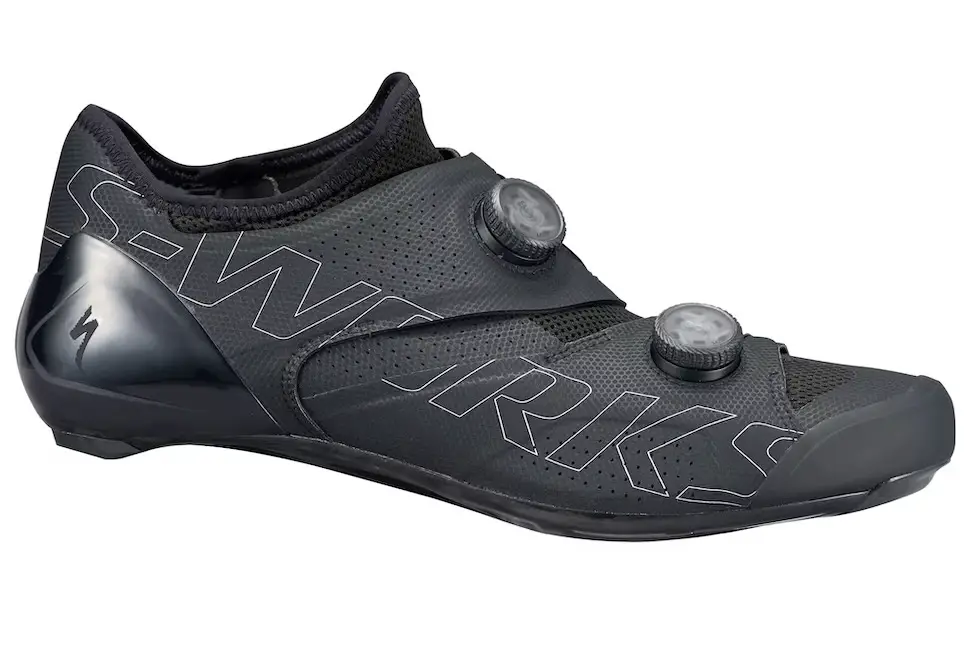
The Specialized S-Works Ares is a high-end race shoe that features a unique design and bold claims that they can make you 1% faster. While that can be hard to quantify, that’s exactly the type of marginal gain that could make a difference in a KOM hunt, massive climb, or sprint finish of a race.
The primary thing that sets the S-Works Ares apart is the unique design of the uppers that is intended to capture the foot very securely while still remaining comfortable over the long haul. A quick look at the shoe, and you can see that it has a full-wrap, sock-like interior that is surrounded by a non-stretch synthetic/TPU/Dyneema upper. Two Boa Li2 dials attach to large flaps that wrap over the upper and lower foot and spread tension very evenly while reducing the chances of pressure points and hot spots. The result is a very secure fit with the heel held solidly in the heel cup. The fit of the Ares is similar to other recent Specialized road shoes like the S-Works Torch, meaning that it is a little roomier in the forefoot than older models.
Still, we found it easy to get them adequately tensioned over the whole foot and actually had to learn to back off the tension slightly for maximum comfort. Once the tension was decreased to the perfect setting, these shoes really came into their own. Despite feeling slightly looser than we’re used to, they remain impressively secure for those hard efforts. The super stiff carbon sole delivers all the power on the downstroke, while the non-stretch wrap uppers maximize the pull of the upstroke as well. We think Specialized did a great job of making a sprint-ready shoe that also manages to stay comfortable and doesn’t require pre-sprint micro-adjustments.
Despite not looking overly ventilated, we found them to allow for pretty good airflow through the exposed sock-like panels on the toes and midfoot, numerous perforations on the uppers, and a small vent under the toes. The front of the FACT Powerline carbon sole has some rubber tread at the front that wraps up into a toe bumper, and there is a replaceable heel tread that helps make these shoes walk reasonably well for what they are.
The Specialized S-Works Ares is a bit of a niche shoe and they are certainly not going to be for everyone. That said, if you’re looking for a sleek shoe that could potentially make you 1% faster, then they might just be the ticket.
Bikerumor founder, Tyler Benedict, put a pair through their paces for a full review of the Specialized S-Works Ares.
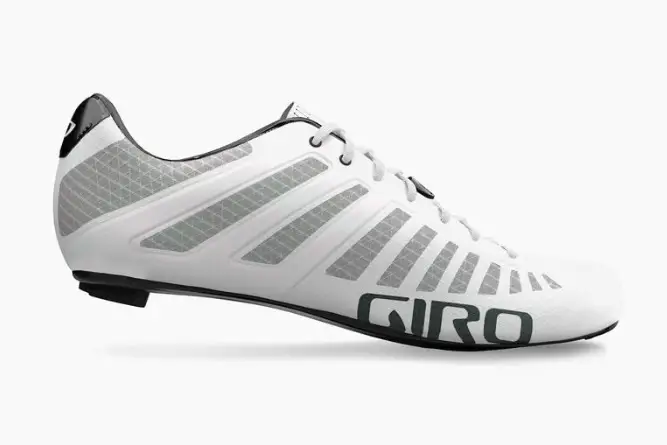
When Giro first introduced the Empire road shoe, its lace-up design was polarizing, but over a decade later, it has become the brand’s most popular road shoe, with a devout following. They’ve continued to expand their line of road shoes, with the Empire SLX featuring a similar design to the original Empire but with a different upper construction.
Riders who covet the newest tech and need in-ride adjustability will not appreciate what the Empire offers. But for those who prioritize fit over all else, laces offer a level of fit customization that no mechanical adjustment system can match or mimic. For riders who struggle with pressure points across the top of their feet, laces are an elegant solution and one of the highlights of the Empire SLX.
Giro has recently updated the Empire SLX with its proprietary Synchwire upper material, which is incredibly supple and lightweight. In fact, these are the lightest shoes we tested. The attributes of Synchwire amplify the comfort benefits of laces in addition to making it shockingly lightweight and very well-ventilated. Synchwire also helps mitigate one sticky critique of the original Empire, which has been its narrow fit in the forefoot. While still on the narrower end of things, the Synchwire creates a more accommodating forefoot fit, thanks to a more accommodating stretch at the sides of the shoe.
With stiff carbon soles, excellent ventilation, and an absurdly light weight, the Empire SLX works great for any type of riding, assuming it fits. If you want a truly custom fit, and don’t mind taking a few extra moments to dial in the laces before your ride, the Empire SLX could be a game-changing shoe.
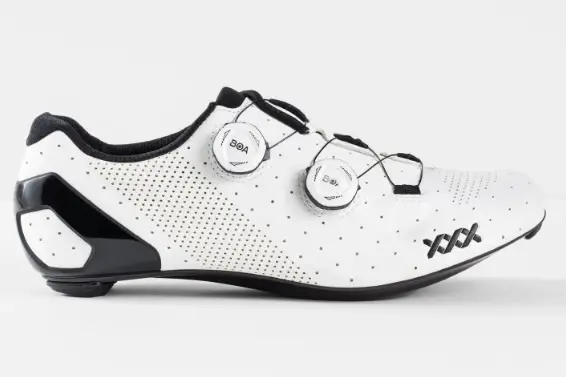
The Bontrager XXX is one the most comfortable shoes we tested. A generous fit in the toe box, supple upper, and effective asymmetric shaping in the heel make this an excellent choice for long endurance rides. The fit is a bit too spacious in the forefoot to match the unflinching efficiency of the Shimano S-Phyre and Rapha Pro Team, so we would recommend those options for crit and road racing over the XXX.
The XXX runs at least a half-size long, and this large fit compounds the wider toe box to make it effectively run a full-size large for riders with average width or narrower feet. We’d recommend trying these on if possible to ensure you get the proper length and that the width works for your feet. Thankfully, Bontrager’s 30-day unconditional comfort guarantee means you won’t have to be stuck with them if they aren’t the right fit for your feet.
The synthetic uppers and asymmetrical wrap closure with dual Boa IP1 dials offers a snug and stable fit over the upper and midfoot and the textured heel cup lining helps lock it in place. The tongue is also more padded than most to help prevent excessive pressure on the dorsal tendon. The uppers are heavily perforated and allow for fairly good air movement along with small sole vents to help keep the sole of the feet from overheating. The heel of the sole also features a replaceable bumper that should help you extend the lifespan of these expensive shoes.
The OCLV carbon outsole is supremely stiff – a 14/14 based on Bontrager’s stiffness scale – but thankfully, the XXX manages to keep this stiffness from becoming buzzy feedback underfoot. The XXX is a shoe that shines on long rides, more so than shorter anaerobically fueled outings. For fondos, credit card tours, or just spending long hours in the saddle in utmost comfort, the Bontrager XXX is a winner.
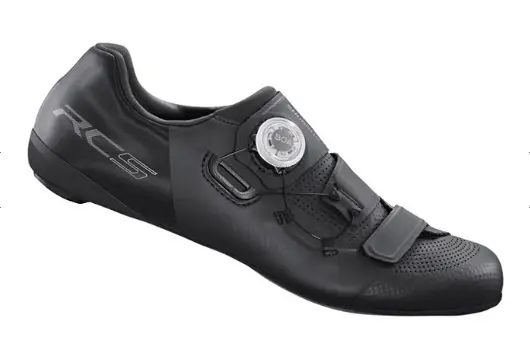
The RC5 falls squarely in the middle of Shimano’s line of road cycling shoes with similar looks and some of the features of its higher-end siblings. While it looks the part, the RC5 is a toned-down road shoe that provides a solid all-around performance for avid road cyclists in a more approachable package and at a much more reasonable price.
For riders who aren’t racing or trying to assert their dominance on Strava, the sole stiffness rating of 8 should be adequate for most types of riding. This is compared to the race-oriented S-Phyre RC9 which tops their stiffness scale at 12. Still, it doesn’t feel excessively soft or flexy under power for most recreational riding and steady efforts short of sprints or high-intensity workouts. The carbon fiber reinforced nylon sole is thin with minimal stack and feels quite stable on the pedals. The sole is wrapped in TPU with non-replaceable bumpers at the toe and heel that provide a bit of extra grip when walking.
The wrap-style tongue design is borrowed from the more expensive RC7 and S-Phyre RC9 models and it results in a nice snug fit around the upper and midfoot with a single Boa dial that pulls tension evenly across the two large straps. A small velcro strap aims to add tension over the forefoot. Like other Shimano shoes, the “regular” fit is slightly on the narrow side, but fortunately, this shoe is also available in a wide version. The synthetic leather and TPU mesh uppers are heavily perforated for ventilation, along with sole vents under the toes that allow for a good amount of air movement.
The 3-bolt cleat mount offers ample adjustment range, and the RC5 tips the scales at a relatively light weight, especially for the price. Still, there’s no mistaking these shoes for top-of-the-line road shoes, because they aren’t. Riders seeking the most precise fit or super stiff soles will likely be a little underwhelmed. That said, those who value a little forgiveness and a wallet-friendly price tag may find a lot to like in the affordable Shimano RC5.
| Road Bike Shoe | MSRP | Weight (per shoe) | Outsole | Closure System | Cleat Compatibility |
|---|---|---|---|---|---|
| Rapha Pro Team | $380 | 250g (size 42) | Carbon fiber | Dual Boa Li2 | 3-bolt road |
| Giro Cadet | $165 | 265g (size 44) | Carbon fiber reinforced | Boa L6 and velcro strap | 3-bolt road and 2-bolt mountain |
| Bontrager Circuit | $145 | 268g (size 42.5) | Nylon composite | Boa L6 dial and velcro strap | 3-bolt road and 2-bolt mountain |
| Specialized S-Works Torch | $450 | 225g (size 42) | Carbon fiber | Dual Boa S3 Snap-fit | 3-bolt road |
| Shimano S-Phyre RC9 | $450 | 223g (size 42) | Carbon fiber | Dual Boa Li2 | 3-bolt road |
| Sidi Wire 2 Carbon | $500 | 320g (size 44) | Vent carbon | Sidi Techno dials | 3-bolt road |
| Rapha Classic | $260 | 250g (size 42) | Carbon fiber reinforced nylon | Laces and velcro strap | 3-bolt road |
| Fizik Vento Stabilita Carbon | $400 | 227g (size 42) | Carbon fiber | Dual Boa Li2 | 3-bolt road |
| Specialized S-Works Ares | $425 | 220g (size 42) | Fact Powerline carbon | Bual Boa Li2 | 3-bolt road |
| Giro Empire SLX | $375 | 185g (size 42) | Carbon fiber | Laces | 3-bolt road |
| Bontrager XXX | $420 | 260g (size 42) | Carbon fiber | Dual Boa IP1 | 3-bolt road |
| Shimano RC5 | $170 | 241g (size 42) | Carbon fiber reinforced nylon | Boa L6 dial and velcro strap | 3-bolt road |
The Bikerumor team has spent over a decade reporting on and testing the latest and greatest cycling products. In fact, we typically know about and get to try new and updated products before they even hit the market. Every model included in this review was tested by our review author or another member of the Bikerumor editorial team.
Our team consists of riders that span the full spectrum of cycling disciplines, with mountain bike, gravel, and road bike specialists. For this buyer’s guide, we recruited review author, Bennet Shane, to test 10 pairs of the best road bike shoes on the market and share his expertise. Bennett lives in Portland, OR, and has spent the better part of the past two decades grinding out long miles on his road bike while working for a number of prominent brands in the cycling industry. After a decade of racing road and gravel, Bennett has shifted his focus to riding for fun and fitness, and his family. His experience as a cyclist and working in the industry have helped develop his knowledge and understanding of gear and technologies and given him a keen sense of what makes a great road bike shoe along with the ability to tease out the subtle performance differences between the products he tests.
After researching the best models available in 2023, we selected a diverse group for real-world testing and comparison. Each model was taken out for numerous test rides of various lengths to get a feel for how they perform when the rubber hits the road. Important considerations like fit, comfort, power transfer, and ventilation were taken into account to narrow in on our favorite models and those that excel in specific areas. We present those findings here.
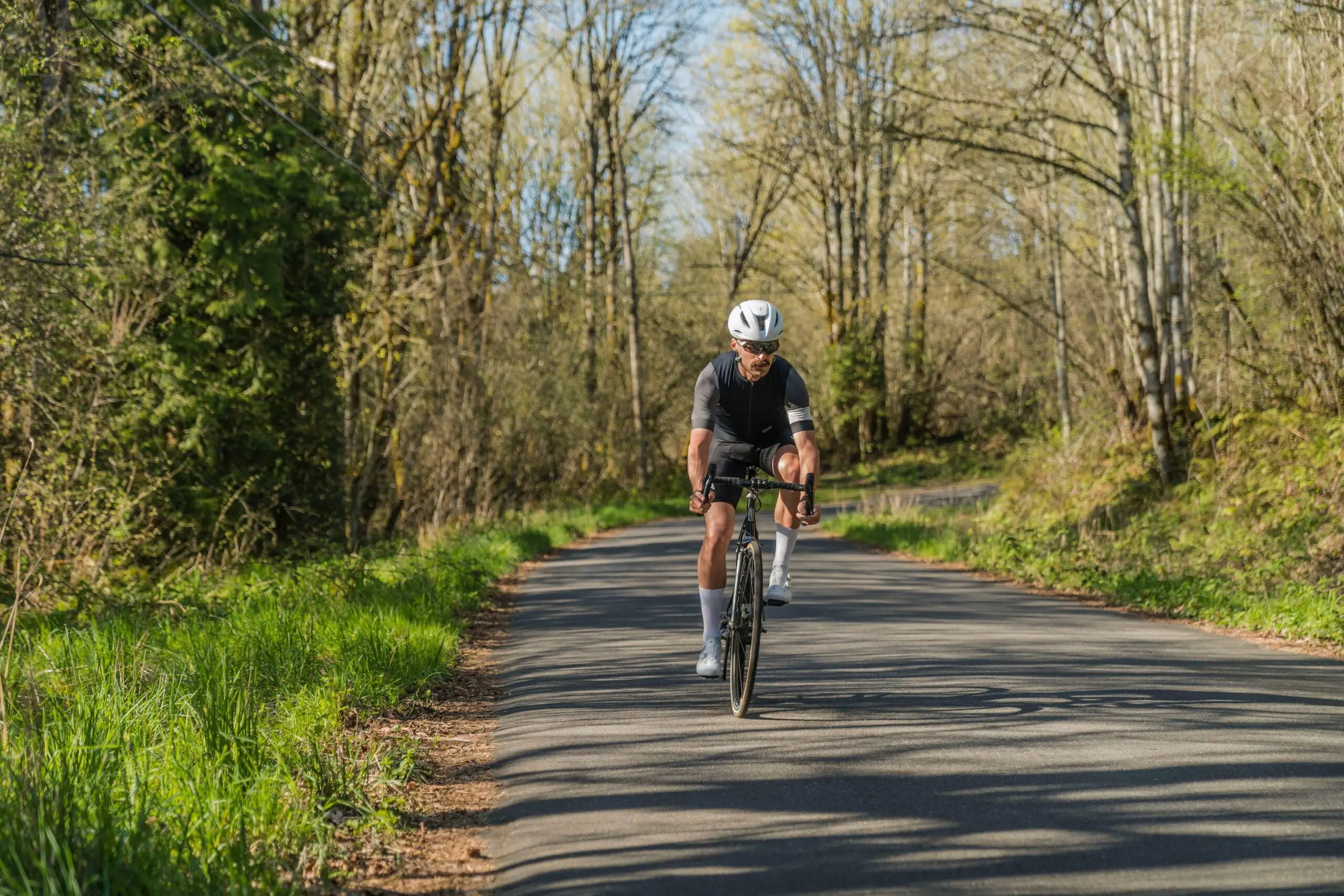
There’s a lot to consider when searching for the best road bike shoes. What type of riding are you doing? What performance characteristics are most important to you? How much are you willing to spend? When considered all together, the answers to those questions should help you narrow it down to the right shoe to meet your needs and budget. One of the most important things, and we can’t stress this enough, is to get a pair of shoes that fits well.
Getting a pair of road biking shoes that fit properly is essential for both comfort and performance. Shoes that fit well will provide all-day comfort and a more secure hold of the foot that results in better stability, control, and power transfer. Cycling shoes come in a range of sizes, with most being measured in EU sizes ranging between approximately 38 to 48 for adults, give or take. Most are also offered in half sizes for the majority of their size range to facilitate a better fit right out of the box. If you don’t know your size, you can check other pairs of shoes you have for reference, or head into a shop and get measured. Most bike shoes are designed with Euro sizing in mind, then US shoe size values are assigned to them. Not every brand does those calculations the same, either, so the European measurement is almost always more accurate. Like any other footwear, it’s often best to try shoes on before you buy to make sure they fit properly in length, width, and overall volume.
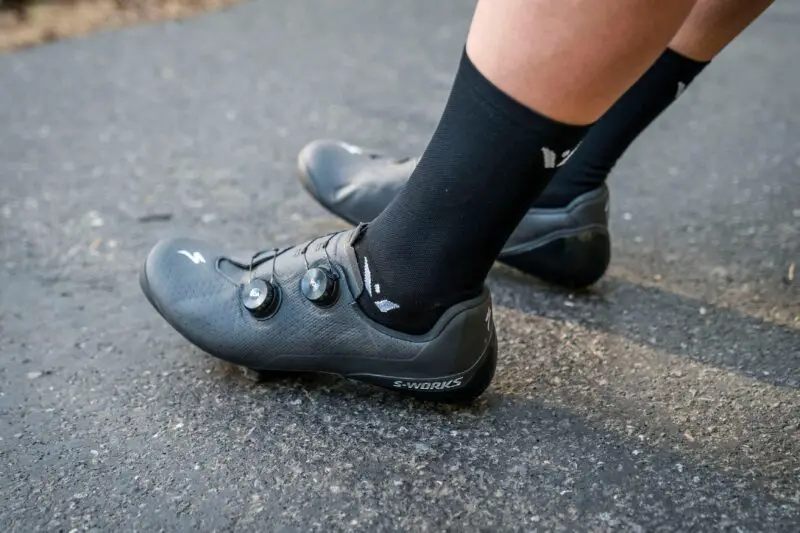
When trying shoes on, always wear your cycling socks because sock thickness can skew a shoe’s fit significantly. It is also worth noting that most shoes will feel tightest when they are brand new, and they will break in over the course of the first few rides. Most shoes come in a “regular” width that is intended to fit those with average-width feet, which is the majority of riders. Shoes for road cycling are intended to be snug and fit precisely around the feet and they are often low-volume as a result. Thankfully, a few brands offer wide versions of select shoes for people with wider feet.
When trying on shoes, four key areas to judge are the toe box, arch support, ankle opening, and heel cup. In the toe box, there must be enough space for the toes and forefoot to spread out freely. This space must be adjustable, however, to ensure that there is no excessive movement of the forefoot. Generally speaking, if you feel like you don’t need to adjust the shoe to remove some volume from the front of the shoe after you’ve put it on, the shoe is likely too small in size, or too narrow. Likewise, if you can’t get the shoe tight enough around the forefoot, it is probably too wide or high volume.
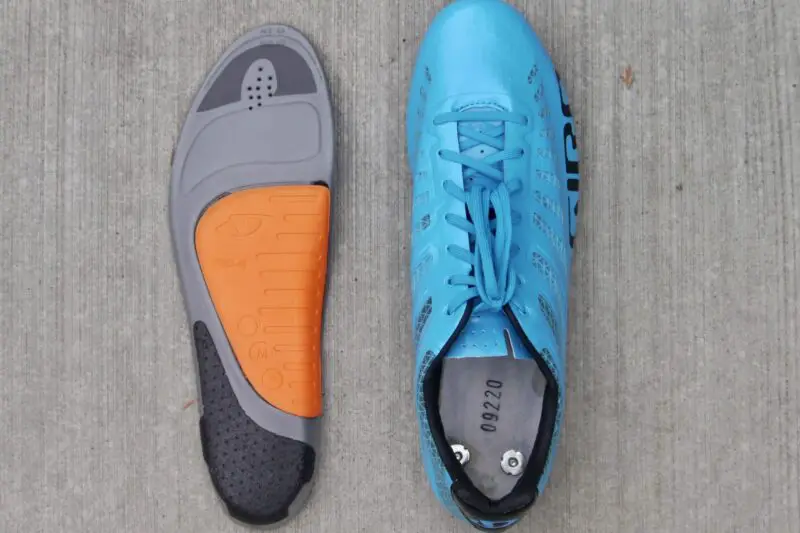
The arch support is a raised portion of the insole that cradles the arch of your foot, preventing it from collapsing under force from your pedal stroke. This support should feel natural and evenly dispersed along the inboard side of the shoe. Standing on one leg is a great way to test whether the arch support is sufficient and located correctly for your foot. Some shoe feature insoles with adjustable arch support, and many serious riders will put aftermarket insoles or custom orthotics in their shoes to really dial in the fit perfectly.
Ankle mobility is important to a comfortable and efficient pedal stroke, so ensure that the shoe’s opening is cut low enough so as to not interfere with your ankle joint and Achilles tendon. This also helps to prevent hot spots and abrasion that can cause discomfort over the course of a ride. Lastly, the heel must be held tightly in place, without any slipping that will cause your heel to rise up excessively during intense pedaling.
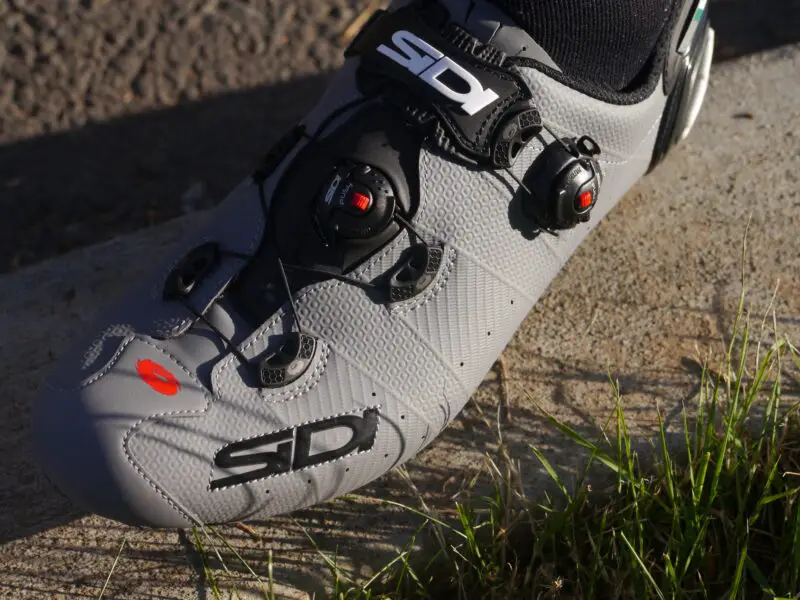
Road bike shoes are made with a number of different materials for their uppers. Synthetic leather, or microfiber, is one of the most common and often features mesh panels or perforations for breathability. Microfiber uppers can be somewhat stiff initially and require a few rides to conform to your feet, while others are soft and supple right out of the box.
As material and construction technologies advance, knit uppers are becoming more popular among road bike shoes. Knit uppers generally provide a supple, sock-like fit and are often more air-permeable than microfiber. Other brands employ different materials like Giro’s Synchwire, which aims to have a supportive structure while allowing air to pass through to keep the feet cool. Similarly, some models feature PU (polyurethane) coated mesh which intends to work in much the same way.
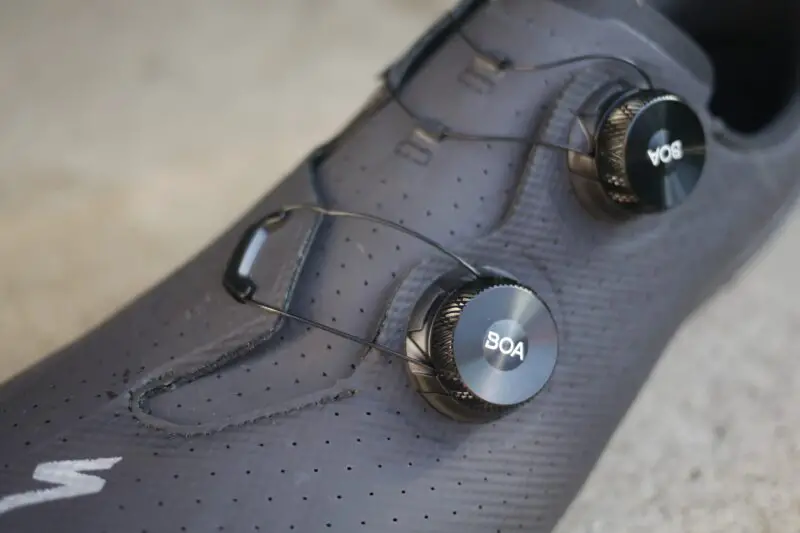
Closures and adjustments are important because they perform the important task of snugging the uppers around your feet. Closure systems for road shoes have been consolidated into three technologies recently; laces, velcro, and BOA ratcheting dials. BOA systems make for quick entry and exit and allow easy and safe micro-adjustment of tension in specific areas of the foot during your ride. Laces are the simplest of all but have a devout following, as they allow for a truly custom fit across the top of the foot, save some weight, are easily replaced, and look smart. Velcro can still be found on many entry-level shoes and is often used in combination with Boa dials. It does the job of securing the shoe without fuss while sacrificing the micro-adjustability of BOA and laces.
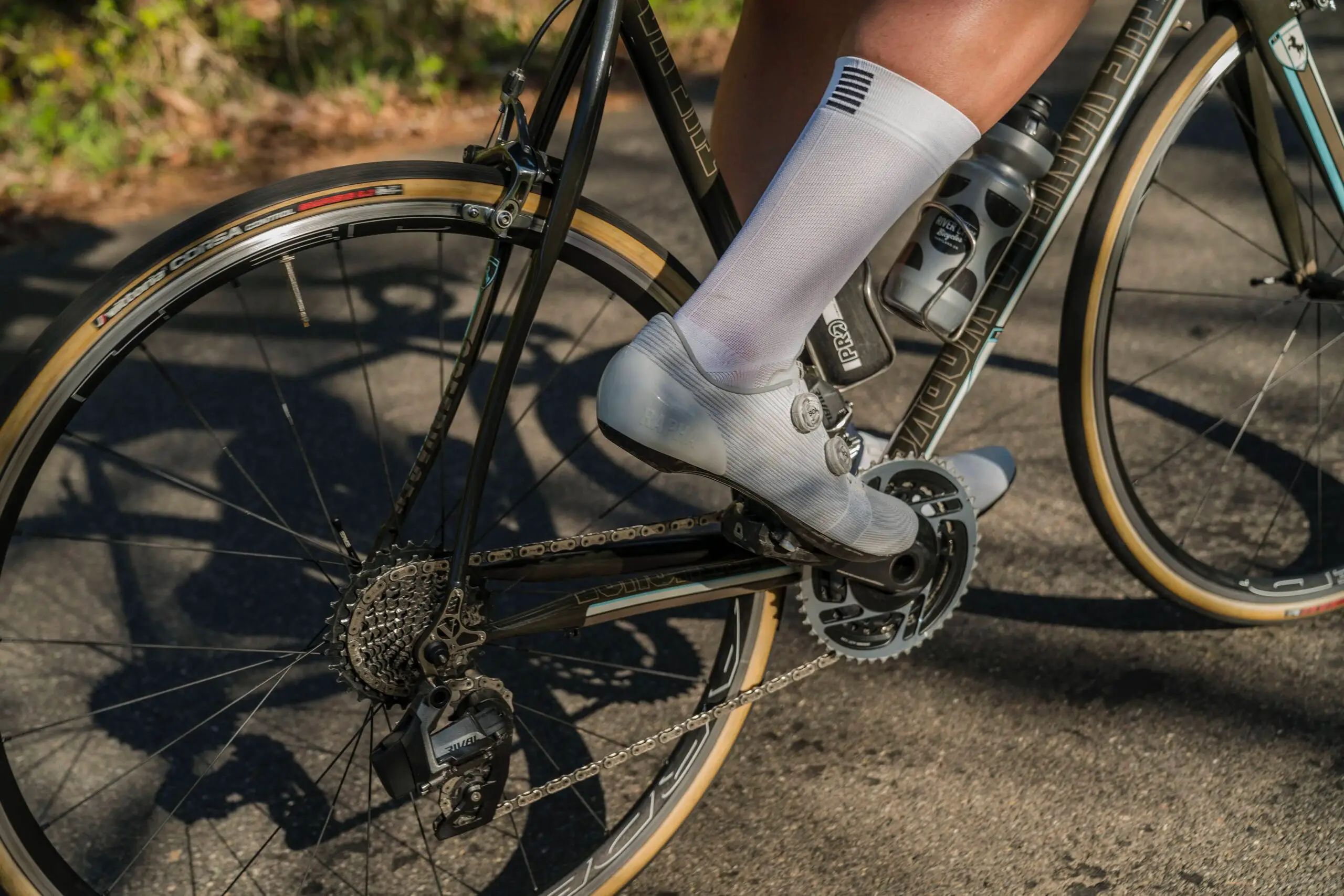
Sole stiffness is a much-discussed aspect of shoe design and can vary in importance depending on the type of riding you are doing. A road bike shoe’s sole stiffness is directly related to its ability to transfer your pedaling power into the pedals, but it needs to be paired with a precise fit. Racers and riders concerned with maximizing their efficiency on the bike will generally seek a very stiff sole that doesn’t flex under hard efforts. This ensures that all of your precious watts go straight into the pedals without any energy lost through sole flex. More casual or recreational riders may not need or want this extreme level of sole stiffness, and might even be happier with a slightly more forgiving sole design.
The same thing that makes the sole ultra-stiff, specifically carbon fiber, also makes it very thin, and that means that less energy is lost between your foot and the spindle of your pedal. It’s not a torsional stiffness the way we think of a bike frame having in the bottom bracket and chainstay, but rather a strength that allows the sole to remain stiff while being wafer-thin. These thin soles keep your feet closer to the pedal spindle for stability and reduce the chances of rocking laterally which can reduce efficiency. Most road cycling cleats are also wide and provide lots of surface area to further enhance stability.
Still, the right fit is essential in the power transfer equation, as excessive foot movement within the shoe can hinder your pedaling efficiency. This is true on the downstroke when pedaling, but also on the upstroke. A well-fitting shoe holds the foot securely so that there is no heel lift or other slop within the shoe that may allow for loss of energy while pulling up on the pedals. Likewise, proper cleat placement and a good bike fit are also critical to long-term comfort, preventing injury, and getting the most out of your pedal stroke.
As you come down in price and performance levels, soles are often constructed from nylon fiber or carbon-reinforced plastic. These outsole designs are typically less stiff and slightly heavier than their carbon fiber counterparts. Bear in mind, however, that a well-fitting shoe with a slightly thicker and more flexible sole will provide better stability and efficiency than an ill-fitting shoe with a hyper-stiff sole.
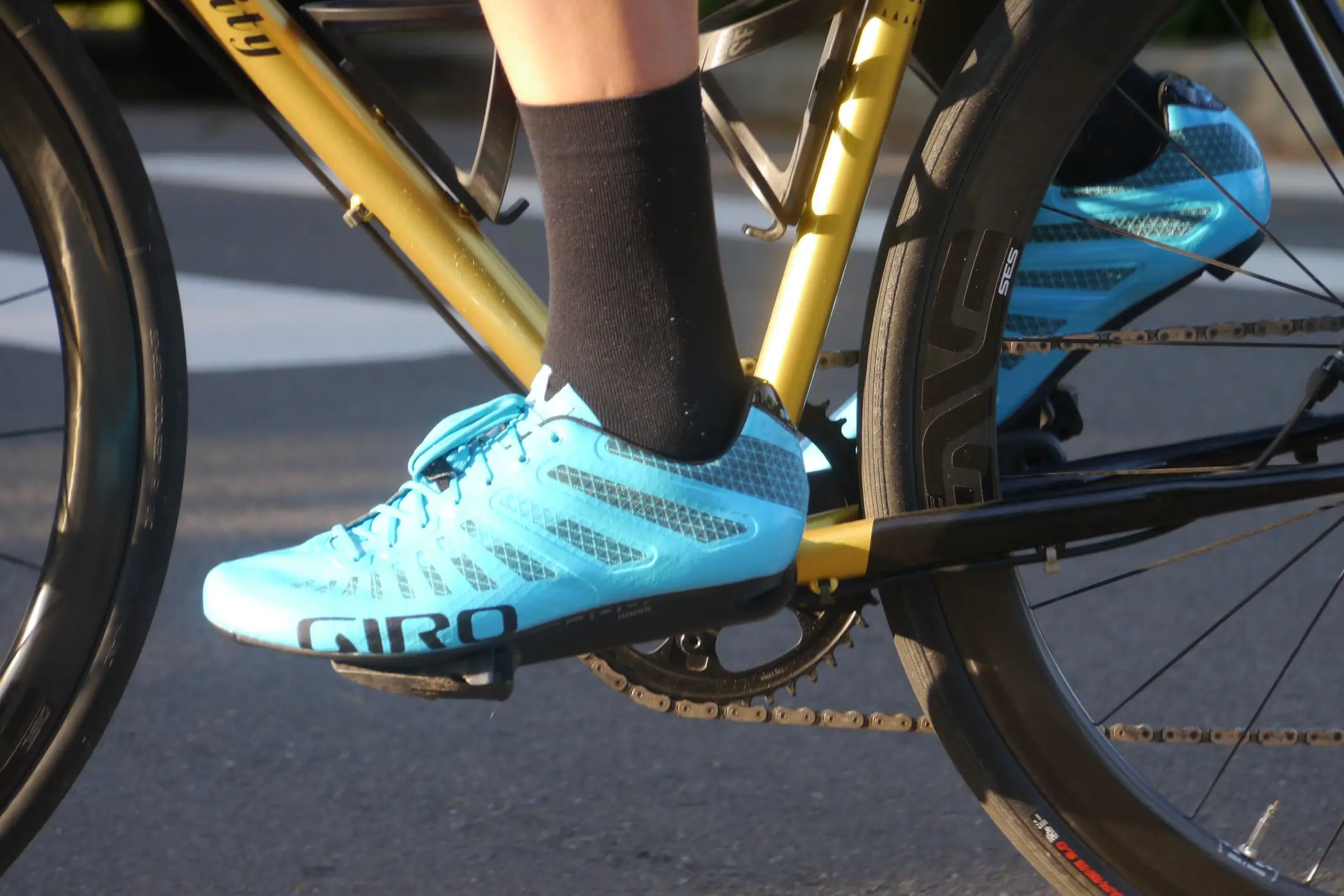
How well your shoes breathe and ventilate your feet is a concern for many riders, but especially those who live and ride in the heat. Upper and sole ventilation can be tricky for riders living in temperate climates, as they rarely see conditions hot enough to warrant the amount of ventilation built into the soles of many higher-end road shoes, and more frequently ride in temps where it can be challenging to keep toes from feeling cold or even worse, losing all feeling. Consider your need for warmth just as much as your need for ventilation.
Ventilation varies among the models we tested and the materials used in their constructions. Microfiber uppers usually feature perforations in the material above the toes and along the side to allow air to pass through and heat and moisture to escape. These days, most microfiber uppers are able to balance ventilation and insulation duties to keep the feet comfortable in a wide temperature range. As a result, most brands have moved away from upper materials that are specifically chosen for their ability to cope with extreme heat, with many designating their shoes with knit uppers as the best choice for hot days. Knit uppers and other designs like Synchwire and PU-coated mesh, typically have the best ventilation. Many shoes also feature some ventilation in the soles themselves that draws air in directly to the soles of the feet.
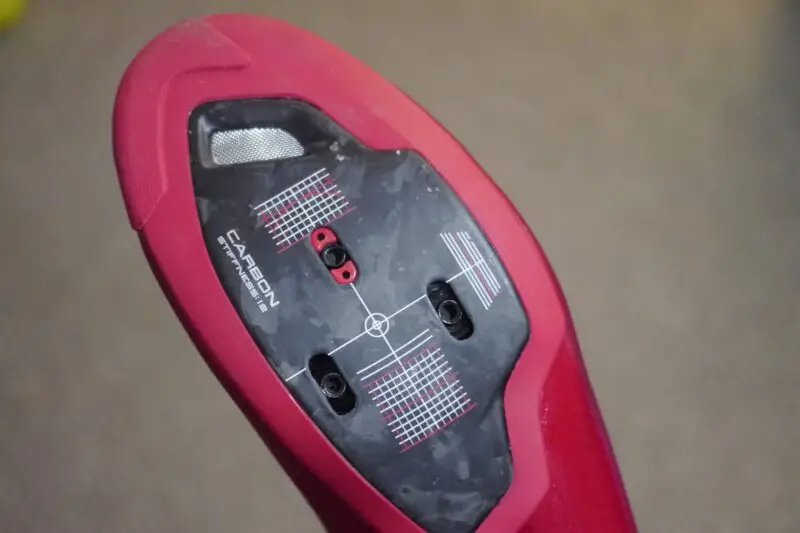
Sole ventilation is another consideration as many brands have vents incorporated into the soles of the shoes near the toes and/or heels. This allows for some direct airflow to the soles of the feet in areas that can be prone to overheating. These ventilation features typically need to be combined with insoles that have matching holes for them to be effective. Sole ventilation may not be necessary for those riding in cooler climates but may be very important for those that ride in the heat.
In the cooler months or when riding in inclement weather, it is often necessary to wear toe covers or full shoe covers to keep the feet warm and dry. Thankfully there are lots of options, many of which are quite affordable too.
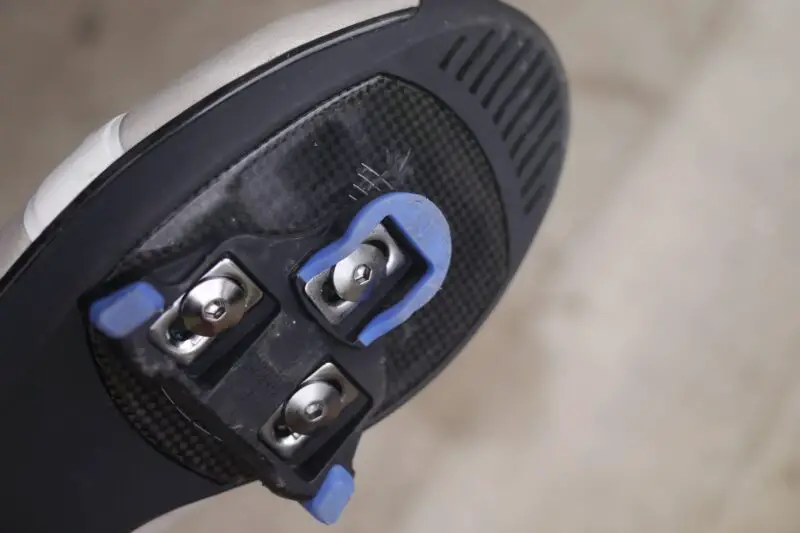
In combination with shoes, you’ll need to choose a pedal system, and those pedals will include the appropriate cleat which you’ll then mount to the sole of your shoes. While they function similarly, road cycling pedals are different from their mountain bike counterparts both in pedal design and the cleats that go with them. Look, Shimano, and Time pedals all have similar, but not cross-compatible, cleats that are fairly large and have a triangular 3-bolt pattern. This 3-bolt pattern is standard among road-specific cycling shoes. Speedplay pedals use a distinct cleat design that includes an adapter for use with all 3-bolt road shoes. Some shoes, generally less expensive, are drilled with both the triangular 3-bolt road cleat pattern as well as the side-by-side “spd” or 2-bolt mountain bike cleat pattern to give you more choices in the pedal and cleat you can use.
Among road cyclists, Shimano and Look pedals are the most popular with Time and Speedplay taking a smaller percentage of the market share. While road shoes and cleats do not allow for a natural gait when walking and can be awkward and slippery at times, the pedal/shoe interface is significantly larger, and this yields better efficiency and comfort, especially with regard to preventing hot spots on the sole of the foot, above the pedal spindle. Still, many road riders love to use “spd” mountain bike pedals along with mountain biking, gravel, or touring shoes because the rubber tread on the outsole of the shoes makes walking much easier and more natural. If you don’t plan to spend much time standing or walking in your riding shoes, we strongly recommend dedicated road shoes for road riding.
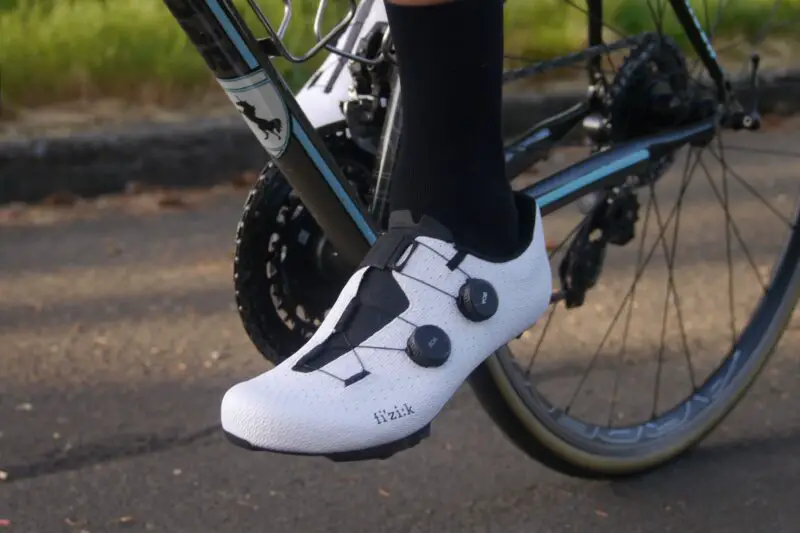
Road cycling shoes remain quite traditional, so most of the choice here comes down to color. White and Black are always safe choices, however, many brands also offer vibrant options that stand out from the crowd, as well as earthy colors that create a classy and understated look. Consider the amount of branding you want on display, as well as how clean you like to keep your shoes, as more minimal designs tend to clean up more easily and avoid looking dated after a few years.
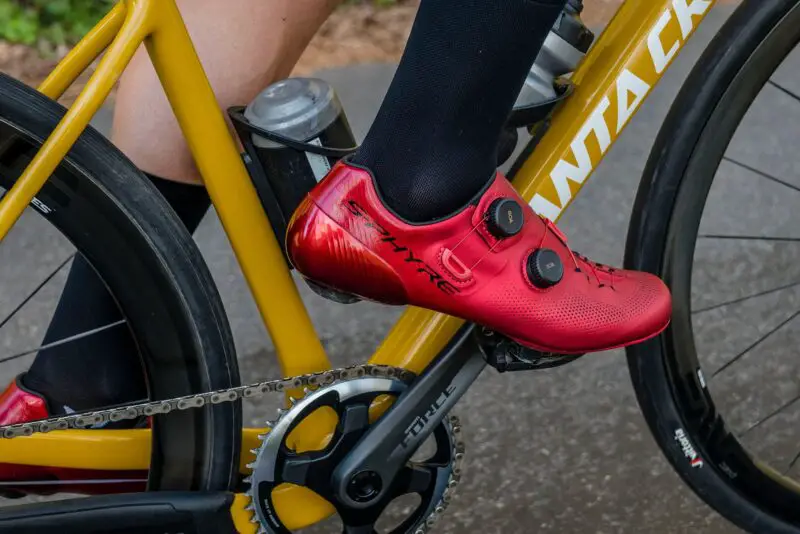
The prices of high-end shoes have increased steadily, nearly doubling those of a decade ago in some cases, so it’s fair to ask what benefit you’re getting from $400 shoes that you won’t find in $150 shoes. After all, the most important aspect of any shoe is the fit, and extra features will not correct a poor fit. That said, higher-end shoes – aside from being lighter, stiffer, and easier to adjust – consistently fit better out of the box, and provide exceptional comfort on long rides than their less expensive counterparts. So it’s likely that whatever style of riding you do – whether road racing, taking on challenging endurance rides, or just riding purely for fun – you will be able to find a great fit at the high end of the market.
Racers and more demanding endurance riders, who regularly ride over 15 hours per week and are keen to maximize their performance, will benefit from the characteristics and advanced features of higher-end shoes. These include ultralight weight thanks to premium materials, increased efficiency and stability by way of wafer-thin carbon soles, and the ability to perfect the fit with advanced closure systems like the BOA dials. When you consider the time and volume of pedal strokes these riders rack up on the bike, cost becomes less of a concern than absolute comfort and maximum efficiency.
For recreational riders who are new to the sport of cycling or don’t expect to spend as much time riding, it’s sensible to try on less expensive road cycling shoes, as they can dutifully execute the task of securing the foot to the pedals, providing stability, efficiency, and comfort, so long as they are the correct fit. Furthermore, many brands transfer technology found on their range-topping models down to the mid-tier shoes in their lineups, using different materials to keep the cost more reasonable.
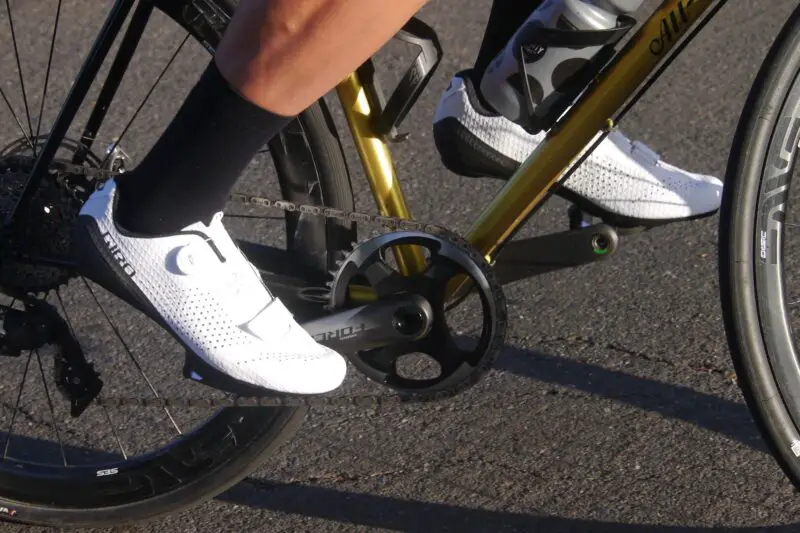
While you can ride a road bike in just about any shoes you choose, road bike shoes are designed specifically for that purpose and are the best option. When paired with road bike pedals, they provide a great connection and excellent power transfer for enhanced efficiency. They are not only lightweight and stiff, but they have streamlined designs that help reduce drag over long hours in the saddle.
Of course. It depends on the model and your performance expectations, but mountain bike or gravel biking shoes are a reasonable alternative to road bike shoes and are preferred by many people because they are generally a bit easier to walk in than road bike shoes. In fact, many high-end cross-country shoes are very similar in stiffness and weight to their road bike counterparts, just with some additional rubber tread added to the soles for walking traction. The right pair of shoes could cover all of your bases for road, gravel, and mtb riding. Both mountain and gravel shoes usually have 2-bolt patterns in their soles, however, so you’ll obviously need to be sure to use pedals with 2-bolt cleats on your road bike as well.
Road bike shoes vary pretty dramatically in price between entry-level models and top-of-the-line racing shoes. The biggest differences are typically in the materials used, with more expensive models featuring full carbon soles and fancier closure systems. There’s also quite a lot of research and development that goes into them, so you end up paying a premium for the latest and greatest technology and designs. Lower-priced shoes typically offer slightly lower performance in specific areas, though they are still generally adequate for more casual, recreational riders.
How much you should spend depends on your budget and your needs. If you’re a racer looking to eke out every watt of power on the race course, then you’ll probably find the marginal gains offered by the most expensive, race-oriented shoes to be worth the premium price tag. Most serious non-racing cyclists will probably find the most value from shoes that are a step down from the top-tier models with little reduction in all-around performance. Casual riders with no competitive aspirations don’t need to spend the big bucks for the fanciest shoes out there and will likely be just as pleased with less expensive shoes and saving a couple hundred dollars.
While many shoes are unisex, many brands make women’s versions of their road cycling shoes. Of course, anyone can wear any shoes that fit them properly, but some women’s shoes have been adapted slightly to better fit a woman’s foot shape. Women’s versions of cycling shoes tend to be a bit narrower in the heel, and they come in smaller sizes compared to men’s. Colors are often a differentiating factor, and women’s shoes are sometimes available in different, “more feminine”, colorways.
Read more…
The post The Best Road Bike Shoes of 2023 appeared first on Bikerumor.
By: Jeremy Benson
Title: The Best Road Bike Shoes of 2023
Sourced From: bikerumor.com/best-road-bike-shoes/
Published Date: Thu, 01 Jun 2023 17:50:55 +0000
___________________